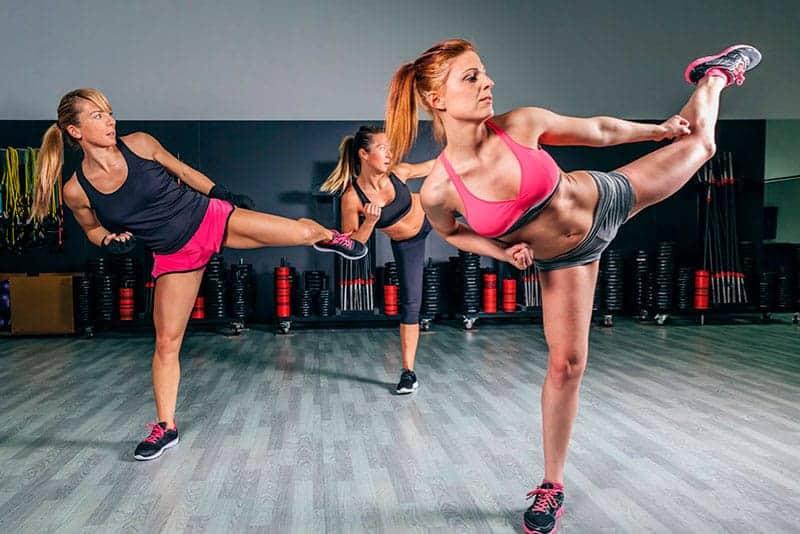
Among the group fitness formats available to Singapore gym members seeking genuine cardiovascular conditioning improvement, bodycombat class has accumulated one of the strongest evidence bases for producing sustained cardiovascular adaptation across diverse participant populations. This effectiveness is not accidental but reflects specific characteristics of the format’s design that align closely with what exercise science identifies as the primary drivers of cardiovascular adaptation.
The Key Characteristics Driving BodyCombat’s Cardiovascular Effectiveness
High Average Session Intensity
Research measuring heart rate response during BodyCombat classes consistently reports average session intensities of seventy-five to eighty-five percent of maximum heart rate, placing the format firmly in the vigorous-intensity cardiovascular exercise category that produces the most significant VO2 max adaptations. This average intensity exceeds that of most other group fitness formats that are not specifically designed as interval training, reflecting BodyCombat’s effective management of sustained high-intensity demand through its combination structure.
The martial arts movement patterns that drive this intensity are inherently demanding because whole-body coordination of punching and kicking patterns against musical tempo requires simultaneous engagement of the cardiovascular system, primary moving muscles, and stabilising musculature that places comprehensive physiological demand on the participant throughout the session.
Large Muscle Mass Engagement
BodyCombat’s combination of upper body striking patterns with lower body kicking and footwork movements engages the largest available muscle mass simultaneously throughout the session. Cardiovascular demand is proportionate to the muscle mass engaged during exercise, meaning that BodyCombat’s simultaneous upper and lower body engagement creates higher cardiovascular load at equivalent subjective effort than purely lower body formats like cycling or running.
Sustained Duration at Training Intensity
The sixty-minute standard duration of BodyCombat classes, during which training heart rate is maintained at vigorous intensity for the majority of the session, provides the sustained cardiovascular training volume that produces meaningful aerobic adaptation. Research on cardiovascular adaptation consistently identifies both intensity and duration as primary determinants of VO2 max improvement, and BodyCombat’s combination of high average intensity across a full sixty minutes creates the training stimulus that shorter or lower-intensity sessions cannot replicate.
True Fitness Singapore’s BodyCombat programme provides the class quality and scheduling consistency that allows members to develop genuine cardiovascular conditioning through regular participation. True Fitness Singapore delivers BodyCombat at the intensity and instruction quality standard that produces the cardiovascular adaptations the format’s evidence base supports.
FAQs
Q. – How many BodyCombat sessions per week produce meaningful cardiovascular fitness improvement?
Ans. – Two to three sessions per week over eight to twelve weeks produces significant cardiovascular improvement in previously moderately active adults. The magnitude of improvement is greatest in the first eight weeks and continues at a diminishing rate as fitness approaches the ceiling that the format’s training intensity can challenge.
Q. – Is BodyCombat suitable for building cardiovascular fitness for endurance sports like running or triathlon?
Ans. – BodyCombat develops general cardiovascular capacity that provides a useful fitness base for endurance sports, but the format’s full-body coordination demands and non-running-specific movement patterns mean it does not develop the running economy or sport-specific muscular adaptations that endurance sport performance requires. It serves well as a cross-training complement to sport-specific training rather than a primary preparation tool.
Q. – My cardiovascular fitness has plateaued after six months of twice-weekly BodyCombat. What should I do?
Ans. – A fitness plateau after six months reflects genuine cardiovascular adaptation reaching the ceiling of the format’s training stimulus. Adding a third weekly session, increasing personal effort intensity within sessions toward the higher end of your capacity, or incorporating a complementary high-intensity format like HIIT or indoor cycling provides the additional or different stimulus that continued cardiovascular development requires.
Q. – Does the cardiovascular benefit of BodyCombat require completing the full sixty minutes or do partial sessions provide value?
Ans. – Partial sessions provide proportionally reduced but genuine cardiovascular benefit. The final fifteen to twenty minutes of a BodyCombat class typically include cool-down tracks that are less cardiovascularly demanding than the main session, meaning that attending the first forty to forty-five minutes of a class captures the majority of the session’s cardiovascular training value if time constraints prevent full session completion.
Q. – How does BodyCombat’s cardiovascular development compare to swimming for Singapore adults?
Ans. – Both formats produce significant cardiovascular adaptation through different mechanical demands. Swimming’s full-body aquatic movement produces excellent cardiovascular adaptation with minimal impact loading. BodyCombat produces cardiovascular adaptation through impact-loaded terrestrial movement with additional coordination and neuromotor benefits. Both are effective cardiovascular training formats whose relative advantages depend on individual access, preference, and injury history rather than absolute physiological superiority of either.