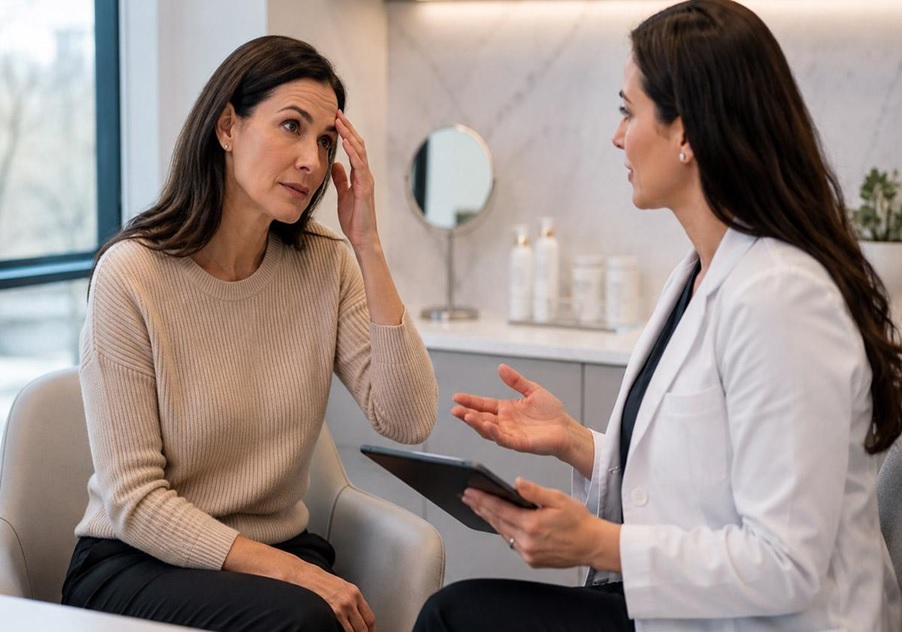
Botox smooths dynamic wrinkles, the lines that form from repeated expressions like frowning or squinting. A first appointment takes about 15 to 30 minutes, results appear within a few days to two weeks, and effects typically last three to four months. Botox does not “freeze” your face or cause dependency when it’s dosed correctly. Choosing a qualified injector matters more than almost anything else, and a consultation is the best way to find out if Botox in Newport Beach is right for you.
You’ve probably thought about Botox for a while. Maybe a friend mentioned her appointment took less than half an hour, or you noticed a line between your brows that wasn’t there a few years ago. If you’re researching Botox in Newport Beach for the first time, it’s completely normal to feel curious and a little nervous at the same time. Will it hurt? Will you still look like yourself? Is the present moment the right time to start?
This guide walks through the basics every first-time patient wants to know: what Botox actually treats, what the appointment itself feels like, how soon results show up, how long they last, and how to separate real information from myth. At The One Plastic Surgery Center, injectable treatments are administered under the medical oversight of board-certified plastic surgeon Dr. Siamak Agha, so patients get an experienced, medically trained perspective before they ever pick up a syringe’s worth of product.
What Does Botox Actually Treat?
Botox treats dynamic wrinkles, the lines that appear when facial muscles contract during expressions like frowning, squinting, or raising your eyebrows. It works by temporarily blocking the nerve signals that tell those specific muscles to contract, which softens the fold in the skin above them. It does not address static wrinkles caused by sun damage or loss of skin elasticity, which typically respond better to fillers or skin resurfacing.
According to the American Society of Plastic Surgeons, the most commonly treated areas are the “11” lines between the brows, horizontal forehead creases, and crow’s feet around the eyes, all of which form from years of repeated expression. Botox was first FDA approved for cosmetic use in these areas in 2002, and the agency has continued to expand its approved indications since, including a 2024 approval for the vertical neck bands sometimes called platysmal bands. Neuromodulator treatments like Botox have become among the most popular procedures in the country, with ASPS reporting nearly 9.5 million treatments performed in the United States in a single recent year.
If you’re not sure whether your specific lines are the dynamic kind Botox addresses, it’s worth browsing the practice’s full skin treatments and med spa offerings or bringing photos to your consultation so your injector can map out a plan tailored to your face.
Are You a Suitable Candidate for Botox?
Most healthy adults with visible expression lines are reasonable candidates for Botox, but the right starting point depends on your skin, your goals, and your medical history. Botox is generally not recommended during pregnancy or breastfeeding, and certain neuromuscular conditions or medications can affect candidacy. That’s why a proper evaluation matters more than a quick walk-in appointment.
Some first-timers wait until lines are fully etched in at rest before trying Botox. Others start earlier, in their late 20s or 30s, as a preventive measure to slow the deepening of expression lines over time. Neither approach is wrong. What matters is that your injector examines your muscle patterns, skin quality, and facial anatomy individually rather than using a standard dose. This is also a particularly valuable moment to ask questions about how Botox might fit alongside other treatments, since some patients eventually explore fillers or skin resurfacing options as their goals evolve.
It’s also important to be realistic about your expectations. Botox softens the movement that creates a line, but it doesn’t erase deep, long-standing creases in a single visit, and it won’t change your bone structure or skin texture. A good consultation should feel like a conversation, not a sales pitch: your provider should ask about your daily expressions, your concerns, and your comfort level with subtlety versus a more noticeable change before recommending a plan.
What Happens During Your First Botox Appointment
A typical Botox appointment lasts about 15 to 30 minutes, and most patients describe the injections as a quick series of small pinches rather than significant pain. The provider will clean the treatment area, mark the specific injection points based on your muscle movement, and use a very fine needle to deliver small amounts of the product directly into the targeted muscles.
Many practices offer a topical numbing option or an ice pack beforehand for patients who are especially nervous about needles, though most people tolerate the sensation well without it. You can typically return to normal activities immediately afterward, with the main precautions being to avoid rubbing the treated area and to skip strenuous exercise for the rest of the day. There’s no incision, no sedation, and no significant downtime, which is part of why Botox has become such an accessible entry point into aesthetic treatment.
A first Botox appointment usually takes less time than a haircut, with no real downtime afterward.
How Soon You’ll See Results, and How Long They Last
Botox results typically begin appearing within two to three days, with the full effect visible around the one-to-two-week mark once the product has fully taken hold in the treated muscles. Results generally last three to four months, though the duration varies by treatment area, dose, and individual muscle strength.
Areas with stronger, more frequently used muscles, like the frown lines between the brows, may need touch-ups a bit sooner than areas with less muscle activity, such as the outer corners of the eyes. Consistent treatment schedules over time can also train the muscles to relax more fully between sessions for some patients, though results and timelines vary and nothing about the process should be treated as guaranteed. Your injector can help you map out a realistic maintenance schedule once they see how your skin and muscles respond to your first treatment.
Common Botox Myths: Frozen Face and “Addiction”
Botox does not cause a permanently frozen or expressionless face when it’s dosed and placed correctly by a trained injector, and it is not physically or psychologically addictive. Both myths tend to trace back to cases where too much product was used or where an inexperienced injector targeted the wrong muscles.
The “frozen face” look most people picture comes from over-treatment, not from Botox itself. In skilled hands, the goal is to soften specific lines while preserving natural movement in the rest of the face, so you can still raise your eyebrows and show expression normally. As for the idea that Botox is habit-forming, there’s no pharmacological basis for dependency. Patients return for touch-ups simply because the effects are temporary and they like the results, the same reason someone might get a haircut or a facial on a regular schedule. Curious how these misconceptions show up in real patient questions? The practice’s post on Barbie Botox walks through another commonly misunderstood trend.
A frozen, expressionless look almost always traces back to over-treatment, not to Botox itself.
How to Choose a Qualified Botox Injector in Newport Beach
The single most important factor in a safe, natural-looking Botox result is choosing an injector with real training in facial anatomy, ideally under the oversight of a board-certified physician. The American Society of Plastic Surgeons notes that board certification in a relevant specialty reflects rigorous training in facial structure, proportion, and the judgment needed to manage complications if they arise, which matters far more than the price of the injection itself.
Before booking, it’s reasonable to ask where your injector trained, how often they perform the treatment, and who supervises the practice medically. It’s also fair to ask what happens if you’re unhappy with a result or experience an unexpected reaction, since a well-run practice will have a clear plan for follow-up care rather than leaving you to figure it out on your own. At The One Plastic Surgery Center, injectable treatments are performed under the medical oversight of board-certified plastic surgeon Dr. Siamak Agha, which gives first-time patients an added layer of confidence that comes from surgical-level knowledge of facial anatomy, not just injection technique.
Conclusion: Deciding If Botox Is Right for You
For many first-time patients, Botox offers a low-commitment way to soften dynamic wrinkles without surgery or significant downtime. Results and candidacy vary from patient to patient, so a consultation is the best way to determine whether Botox, or another treatment entirely, is the right fit for your goals and your face.
Ready to find out if Botox in Newport Beach is right for you? Schedule a consultation with board-certified plastic surgeon Dr. Siamak Agha at The One Plastic Surgery Center to discuss your goals and options.
Frequently Asked Questions
Does getting Botox hurt? Most patients describe the sensation as a quick pinch rather than significant pain, since the needle used is very fine and the injections are shallow. Numbing cream or ice is available for those who are especially sensitive, though many first-timers skip it entirely.
How many units of Botox do first-time patients typically need? The right dose depends on the treatment area, your muscle strength, and your goals, so there’s no universal starting number. Your injector will determine an appropriate dose during your consultation based on an in-person evaluation of your facial anatomy.
Can Botox be combined with other treatments? Yes, many patients eventually pair Botox with dermal fillers or skin resurfacing treatments to address both dynamic wrinkles and other signs of aging. Whether combining treatments makes sense for you depends on your specific goals and should be discussed during a consultation.
Will people be able to tell I got Botox? When Botox is dosed conservatively and placed correctly, most first-time patients look like a refreshed, less tired version of themselves rather than visibly “done.” Overly dramatic results are usually the product of over-treatment rather than the treatment itself.
How soon can I schedule a follow-up treatment after my first Botox appointment? Since results typically last three to four months, most patients schedule their next appointment around that window once they notice movement returning. Your injector can help you build a maintenance schedule based on how your specific muscles and skin respond over time.
Results and candidacy vary by patient. A consultation with a qualified provider is required to determine whether Botox is appropriate for your individual goals and medical history.