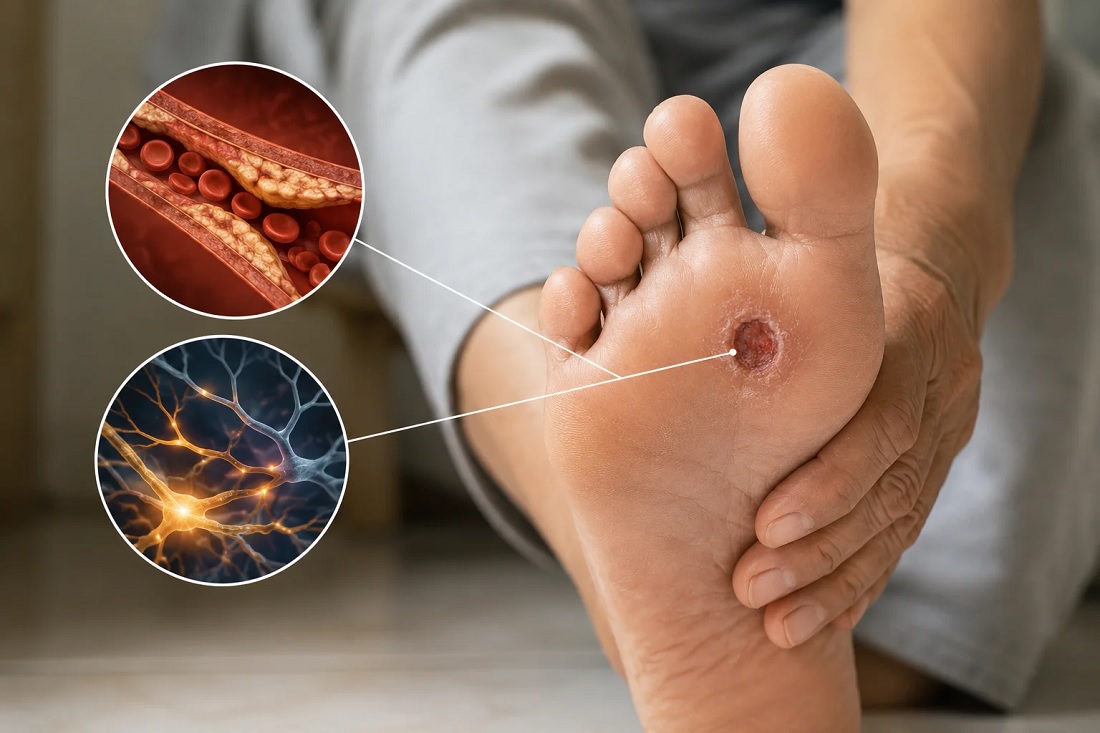
A blister from a new shoe or a small cut on the sole may look harmless, but diabetes changes how carefully any foot injury needs to be treated. Nerve damage can reduce sensation, so the person may continue walking on the wound without realizing how painful or damaged the area has become. By the time it is noticed, the skin may already have broken down further.
Vegaderma provides diabetic foot wound care Bangkok services for wounds that need specialist assessment and ongoing treatment. The first appointment should establish how deep the wound is, whether infection is present, how well blood is reaching the foot and where pressure is being placed during walking. Those details help the clinical team decide what is preventing the area from healing.
Reduced sensation is only one reason a small injury can worsen without attracting attention. Diabetes may also affect circulation in the legs and feet, limiting the oxygen and nutrients reaching injured tissue. High blood glucose may interfere with the body’s response to infection and slow repair. A wound that would normally close in a few days may therefore remain open, leaving bacteria with a route into deeper tissue.
Repeated pressure can keep a foot wound open during normal daily movement. A sore beneath the big toe or ball of the foot is pressed against the ground with every step, even when it does not hurt. Thick callused skin around the area may hide the true size of the wound. Treatment may include footwear, insoles or another method of taking pressure away from the affected area, chosen by the clinical team after examining the foot.
Daily foot checks are one of the most practical safeguards. Look at the soles, heels, sides of the feet and the spaces between the toes, using a mirror if necessary. Check for blisters, cracks, cuts, redness, swelling, bleeding beneath a callus and changes around the nails. Someone with poor eyesight or limited mobility may need help from a family member or carer.
Wash the feet in warm water and dry them carefully, particularly between the toes. Do not soak them, walk barefoot or try to cut away a corn or callus at home. Shoes should fit without rubbing, and the inside should be checked for grit, torn lining or another object before they are put on. Clean socks also make it simpler to spot blood or discharge from a wound that has gone unnoticed.
A foot wound should be assessed promptly rather than watched for several days to see what happens. Redness spreading from the wound, increasing warmth, swelling, discharge, an unpleasant smell or darkening skin require urgent medical attention. Fever or feeling unwell may indicate that an infection is no longer confined to the foot. A lack of pain does not show that the problem is minor.
Clinical care may involve cleaning the wound, removing dead or unhealthy tissue, managing infection, checking circulation and protecting the area from pressure. The dressing and treatment plan depend on the wound itself, so using leftover dressings or antiseptics recommended for somebody else